

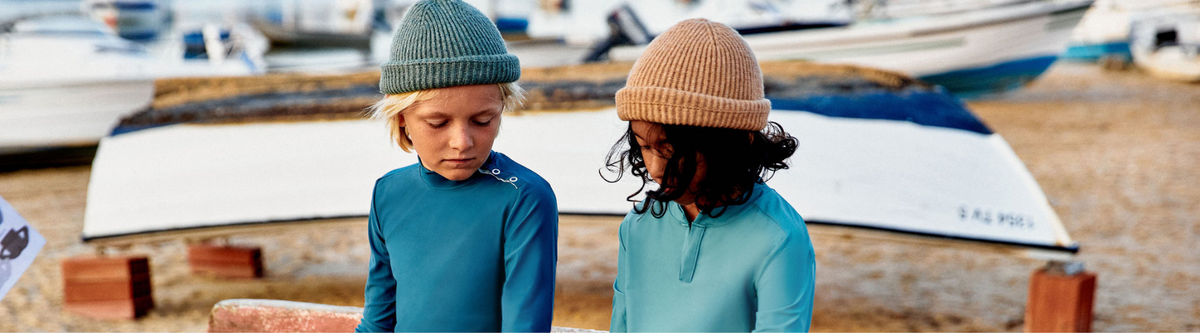
The sun and children's skin
Summer is on its way, and with it comes the irresistible urge to make the most of sunny days as a family! Whether you are planning a seaside getaway or afternoons by the pool, one key question soon comes up: how can you give your children flawless sun protection?
Between UVA, UVB, UPF 50+ ratings and the wide range of products on the market, protecting the delicate skin of little ones can seem complicated. In this complete guide, we explain the risks of UV rays in detail and share all our practical solutions to protect babies and children with complete peace of mind.
Why is children's skin so vulnerable to the sun?
A child's skin is not simply a smaller version of an adult's: it is thinner, less pigmented, and its melanin defence system is still immature. Until adolescence, the skin barrier lets ultraviolet rays penetrate much more deeply into the epidermis.
Immediate risks: sunburn, burns and heatstroke
In the short term, prolonged exposure without suitable protection has immediate consequences:
- Sunburn: This is a genuine first- or second-degree burn. In children, it shows up as bright redness, extreme sensitivity, blisters and sometimes fever.
- Polymorphic light eruption: This sun allergy causes itching and small, uncomfortable spots on the chest, arms or legs.
- Heatstroke (sunstroke): Babies and young children are very poor at regulating their body temperature. Spending too long in the heat can quickly lead to severe dehydration and fainting.
Long-term consequences for sun capital
Everyone is born with a limited sun capital, meaning all of the skin's defences against UV rays. Once this capital is used up, damaged cells no longer regenerate properly. Dermatological studies are clear: a single severe sunburn before the age of 10 doubles the risk of developing melanoma (skin cancer) in adulthood. Protecting your child's skin today means safeguarding their health for tomorrow.

No direct sun exposure before 1 year: the golden rules for babies
Before 12 months, paediatricians and dermatologists agree on one absolute rule: no direct sun exposure. Little ones' skin cannot produce enough melanin to protect itself.
Yet even in the shade of a parasol or beach tent, reflection from sand and water lets through up to 50% of UV rays. When going outdoors with an infant, it is essential to combine:
- Constant shade (covered pushchair, parasol).
- Loose, covering clothing.
- A wide-brimmed baby sun hat to protect the neck, face and ears.
- Category 3 or 4 certified sunglasses.
How to choose the best UV-protective swimsuit for children
To let older children explore the beach, jump in the waves or build sandcastles freely, sunscreen alone is no longer enough. The go-to equipment recommended by health professionals remains UPF 50+ certified UV-protective clothing.
Understanding the UPF 50+ rating
The UPF (Ultraviolet Protection Factor) rating measures how much UV radiation a fabric blocks. A garment labelled UPF 50+ blocks more than 98% of UVA and UVB rays, the highest level of textile protection available.
The Canopea UV-protective range: effective and eco-responsible
At Canopea, we take no half-measures when it comes to your children's health. That is why 80% of our collections are made from Econyl®, a 100% recycled nylon fibre made from fishing nets recovered from the oceans.
Our swimsuits and t-shirts guarantee permanent UPF 50+ protection, with no built-in chemical filters that could dissolve in water or wear off in the wash:
- For little ones: Discover our collection of baby UV-protective swimwear. For complete, reliable coverage, choose an ultra-soft baby UV-protective sun suit, with snap buttons at the crotch for easy nappy changes.
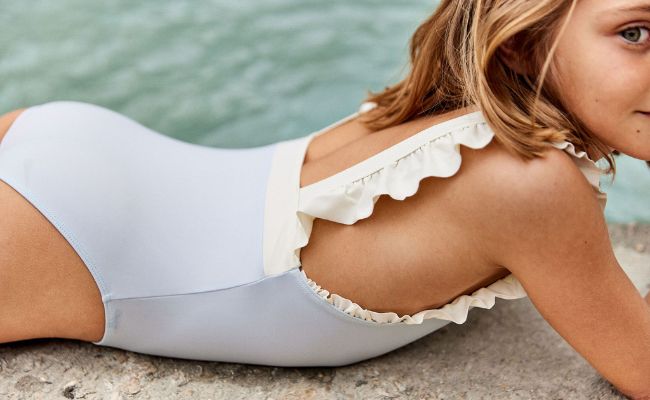
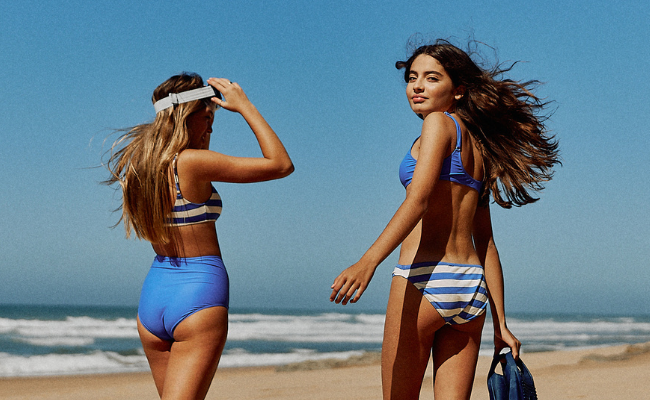
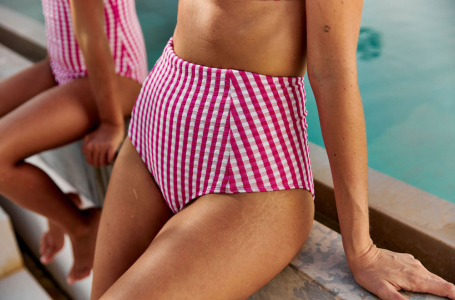
- For girls: Explore our full range of girls' swimwear, available as elegant one-piece swimsuits and retro two-piece sets.
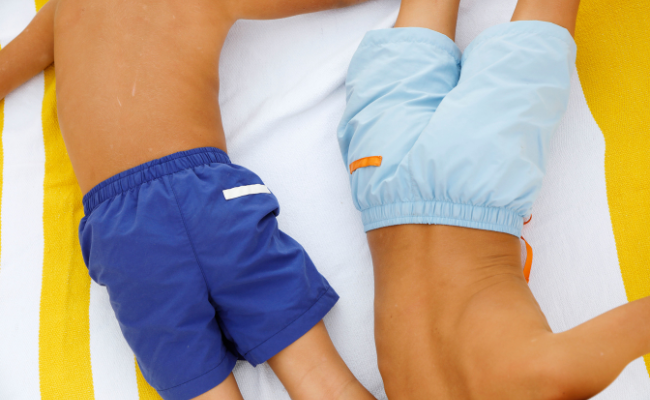
- For boys: Find our quick-drying boys' swim shorts, perfectly matched with our protective tops.
- For maximum upper-body protection: Pair their favourite bottoms with a chlorine- and salt-resistant children's UV-protective t-shirt.
3 essential habits to complete sun protection
The UV-protective swimsuit is the main shield for the body, but it should be part of an overall prevention routine:
1. Apply mineral sunscreen to exposed areas
Generously apply high-protection sunscreen (SPF 50+) to the face, hands, feet and backs of the legs. Choose mineral filters (zinc oxide or titanium dioxide), which form a physical screen on the surface of the skin instead of being absorbed. Make sure to use a hypoallergenic, water-resistant and fragrance-free formula.
2. Strictly respect the shade hours
Avoid any exposure between 12 p.m. and 4 p.m. This is when the sun is highest in the sky and UV intensity is at its peak. Plan beach activities early in the morning or late in the afternoon.
3. Don't be fooled by clouds or a cool breeze
A sea breeze gives a misleading feeling of coolness, just like a slightly hazy sky. Thin clouds let through up to 90% of UV rays! UV protection is therefore still essential, even when the sun doesn't seem to be shining brightly.
To dress your little ones in light, eco-responsible, UPF 50+ certified outfits, discover our complete collection of baby UV-protective swimwear and give them maximum protection all summer long.