
Fast fashion killed me
Do you remember that very pretty dress you spotted last week? You hesitated—a little, a lot—only to finally give up. Back in the boutique today, the dress had mysteriously disappeared. Vanished into thin air, flown away, already replaced on the rack by another dress. This sleight of hand has a name: fast fashion.
At the origins of fast fashion, there were mass-market brands
We know them; we even love them. These large ready-to-wear chains established everywhere, offering accessible fashion, constantly renewed and sold at very affordable prices. They arouse desire in us, pushing us to consume ever more, but above all, ever worse. According to INSEE figures, the French buy twice as many clothes today as they did twenty years ago. A phenomenon that cannot be explained by a providential increase in purchasing power, nor by the sudden arrival of a new season between autumn and winter.
Even if, in reality, everything in the realm of fast fashion is indeed a matter of seasons. But the temporality there is skewed, and benchmarks are shaken up. Everything moves faster, and collections are renewed at a frantic pace, sometimes every month. So we buy on reflex, and clothes pile up and accumulate, sometimes even remaining prisoners of their plastic bags, the tag still attached to the lining. A corollary of this massive overproduction is an equally massive degradation of quality. We buy more, but our clothes have a shorter lifespan.

|
Textile overproduction = human and ecological disaster
The overcrowding of our closets is only one of the anecdotal consequences of fast fashion. The real fashion victims are the planet and the workers who labor in disastrous conditions in some of the poorest regions of the globe. The textile industry is the second most polluting sector after oil. First your car, and right behind it, that little dress bought on a whim from a large Spanish fast-fashion chain. According to figures published in 2016 by the International Energy Agency, fashion emits more greenhouse gases every year than all international flights and maritime traffic combined—that is, 1.2 billion tons. Not to mention the waste, the garbage generated, and the unimaginable volume of water needed to manufacture a single garment. A dress or pair of pants made by a man, a woman, or a child in extreme conditions for a pittance. In 2013, the collapse of a textile factory in Bangladesh caused the death of 1,200 people. This event caused a real shockwave and signaled the beginning of an awakening among consumers and certain major players in the sector.
Down with fast fashion, consuming differently is possible!
A silent revolution is underway. Consumers are increasingly sensitive to environmental and social issues; they want to buy differently. And more and more brands are beginning to reflect deeply on their production rates and the materials they use. Even if the room for improvement is enormous, efforts must be highlighted and young, responsible brands encouraged. As for consumers, they are campaigning for more transparency: where are my clothes made, how, and by whom? It is everyone's responsibility to engage in self-criticism to, little by little, rediscover the pleasure of buying. Less but better.
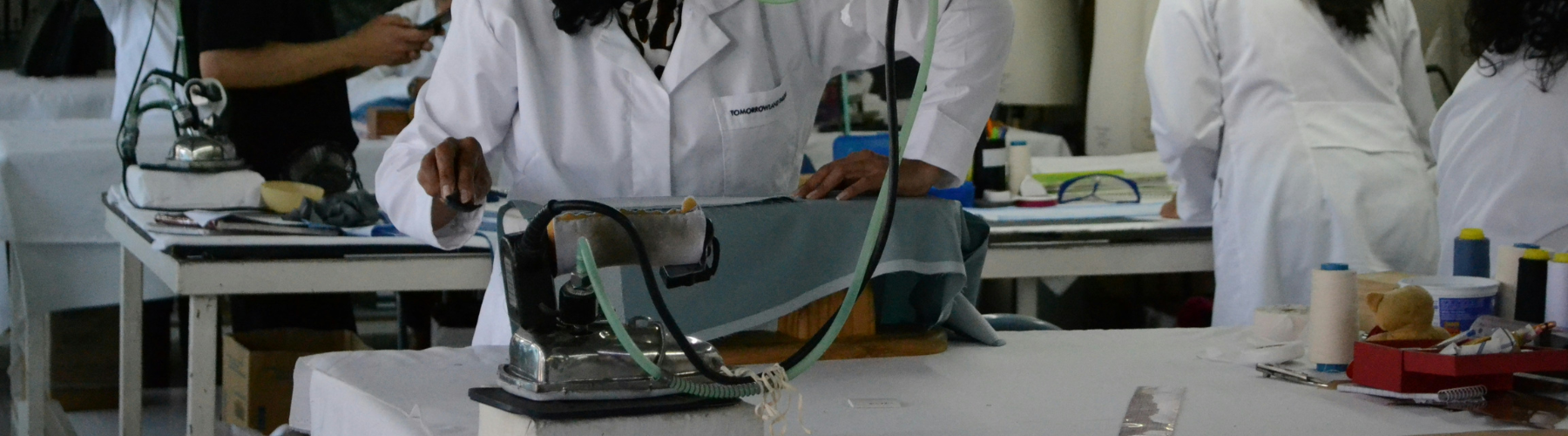
"Don't buy for the sake of doing so. I think people shouldn't invest in fashion, but invest in the world," these words belong to British designer Vivienne Westwood, and they resonate with us very strongly. In our philosophy and the commitments that presided over the creation of CANOPEA. Making quality clothing that is beautiful, eco-responsible, and produced in European workshops for which working conditions are a priority.
For two years now, we have been proud to participate as a brand in The Fashion Revolution to highlight the people who work in our workshops, as well as their craftsmanship.
For more information on this year's edition and how you too can participate, visit their site The Fashion Revolution.